The Medscheme business and IT teams are demonstrating the power of collaboration as they work together to produce accurate and outstanding results.
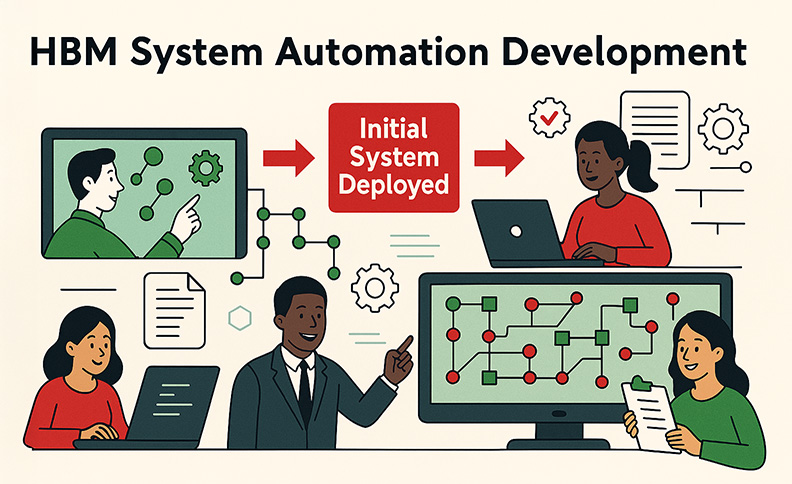
Two years ago, we started on a journey to enable the Medscheme business unit to be part of the HBM Claims automation systems development. Leveraging on the success of previous Blaze Advisor applications and a Decision industry expert, we started building the initial system using reference documentation from the providers and scheme agreements.
The business reviewed the rules and did end-to-end testing of the initial system, after which it was deployed to the production environment. Capitalising on what they learnt from this implementation, the HBM Claims Decision Engine team and the Medscheme business team – now more familiar with the way of creating and testing the system rules – expanded the system in an agile fashion.
Steps of success
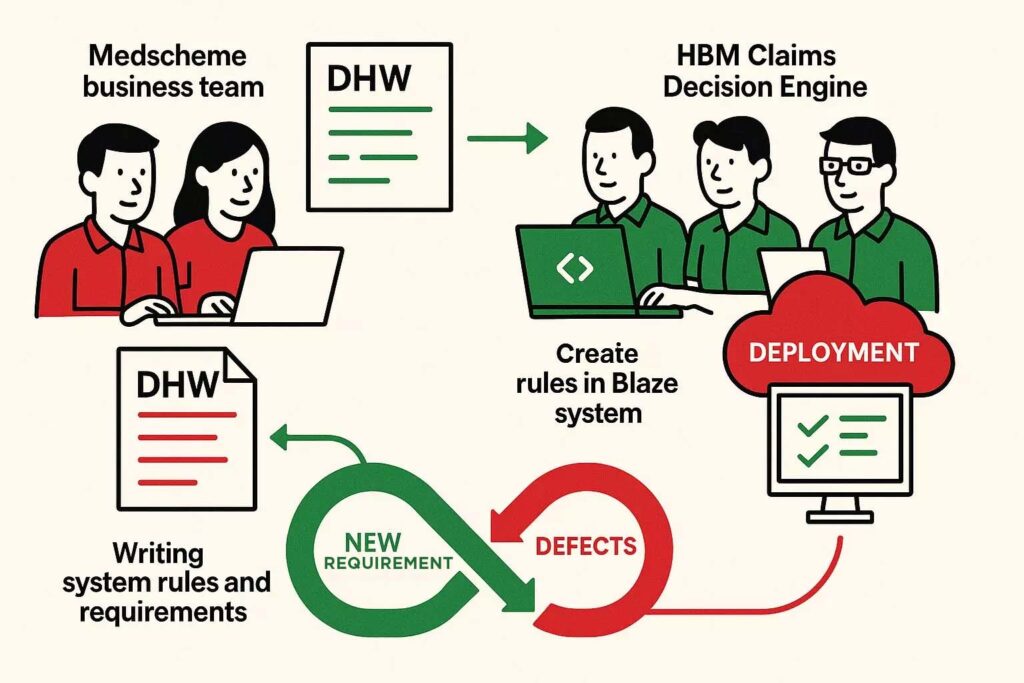
Working in perfect synergy, the Medscheme business team writes system rules and requirements in English, using a standard format in a document called the DHW. After this, Decision analysts can update the DHW with more technical wording, which is then sent back to the business team for review. The Decision analysts and a software developer then create rules in the Blaze system, which once successfully tested, is deployed into production.
The teams can do multiple system deployments to the test environments per day, making for a more agile way of working. Defects are quickly resolved and can be deployed to production at any time, while new requirements are quickly and accurately provided by the business and entered into the system, ready for testing.
The HBM Claims Decision Engine is currently being developed by two Decision analysts and a developer.
Teamwork makes the dream work
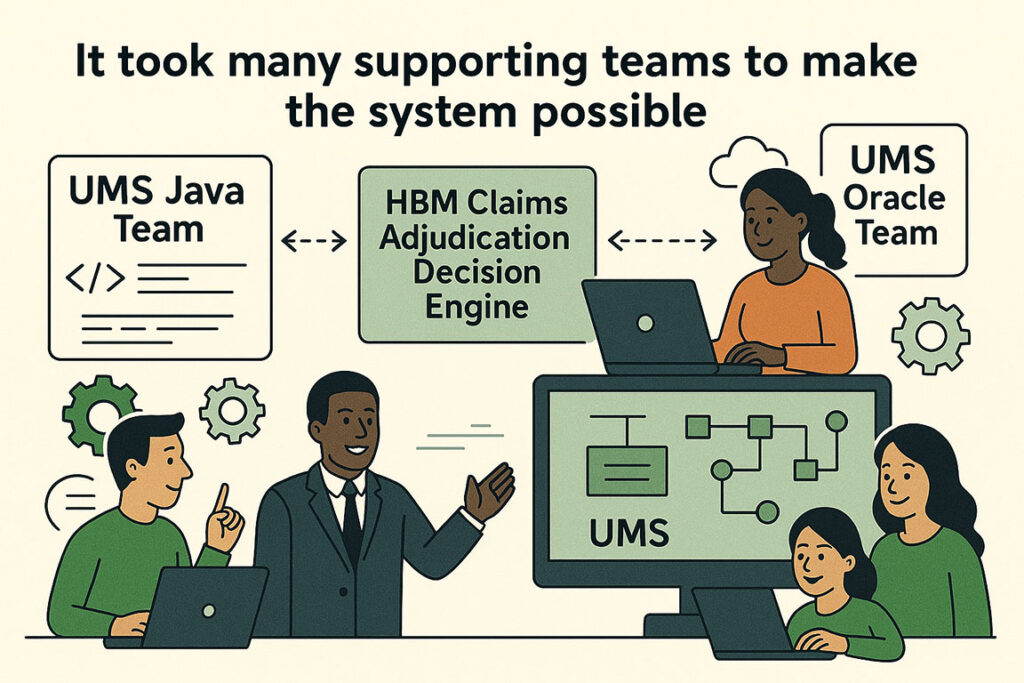
It took many supporting teams to make the system possible – the various UMS Java and Oracle teams created the interfaces needed for the interaction between the HBM Claims Adjudication Decision Engine and the UMS system.
The business team has full control of the business rules going into the system, and by working in an agile way, we can add new requirements or fix bugs quickly.