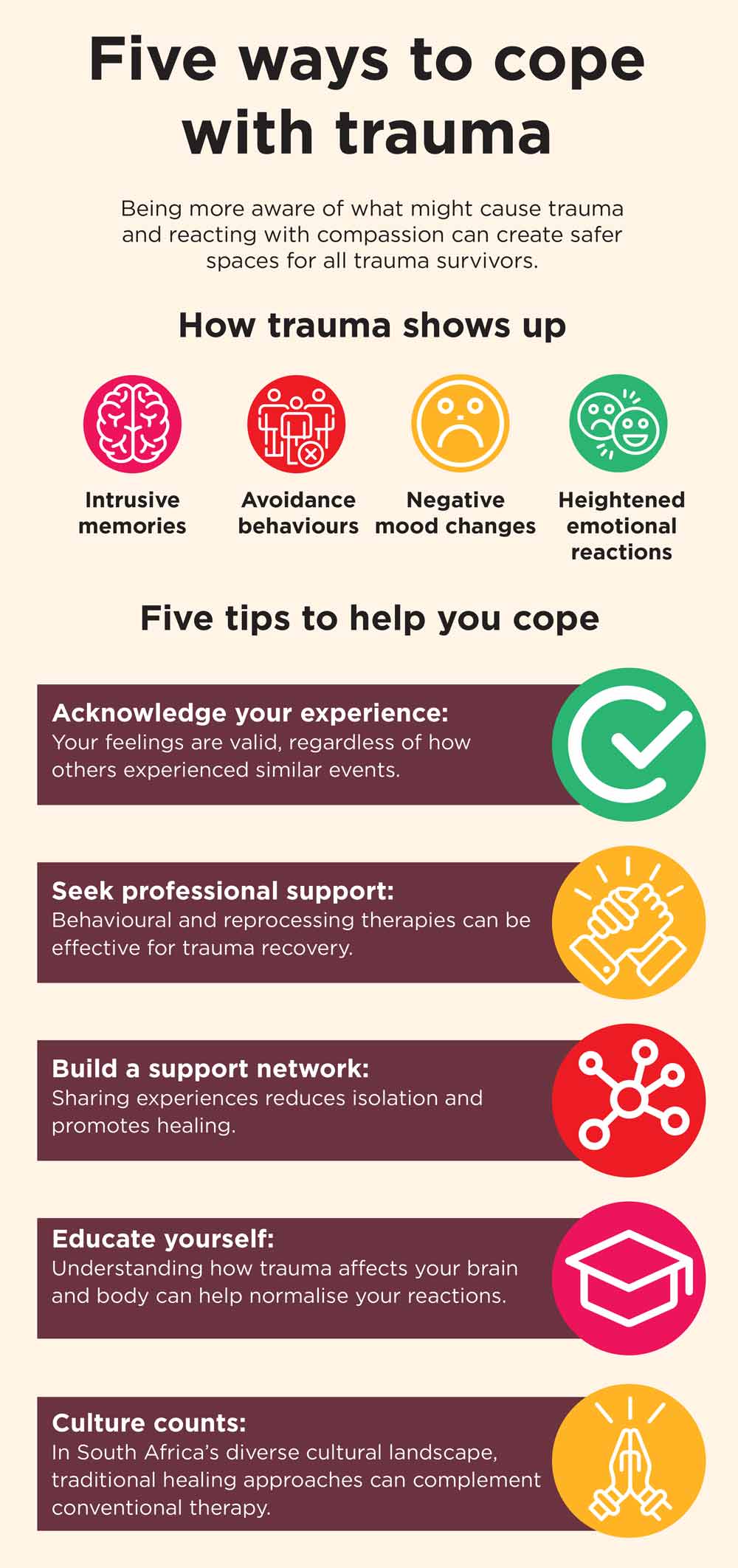
Trauma is far more than just a difficult or shocking experience; it’s an emotional response to overwhelming events that exceed our ability to cope.
World Trauma Day (17 October) shines a light on trauma in all its forms, and especially how it affects our mental health.
In South Africa, trauma exposure is alarmingly common, with approximately 75% of the population experiencing at least one traumatic event in their lifetime, according to a research study in KwaZulu-Natal in 2024. When traumatic experiences overwhelm our normal coping mechanisms, they can lead to Post-Traumatic Stress Disorder (PTSD), which affects about 2,3% of South Africans.
Trauma extends beyond violence and crime, and can stem from unexpected sources.
The emotional wounds from systemic discrimination and oppression during apartheid are passed down from one generation to the next, manifesting in mental health issues, socio-economic challenges, and community dynamics.
Extreme poverty – with its constant battle for food and shelter, lack of access to help, and feelings of hopelessness – creates chronic trauma and affects brain function, which in turn has a profound impact on mental wellbeing.
This collective trauma has contributed to South Africa’s significant mental health burden, with up to 25% of the population affected by conditions such as depression and anxiety.